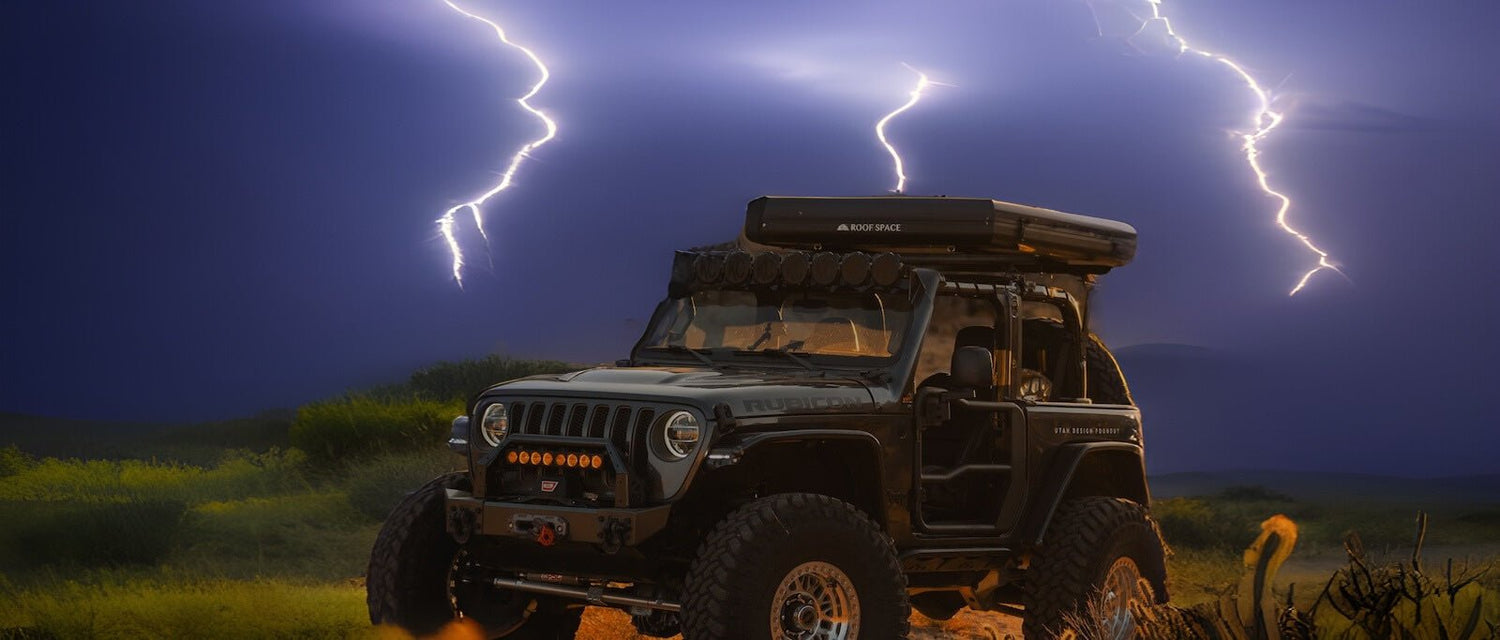
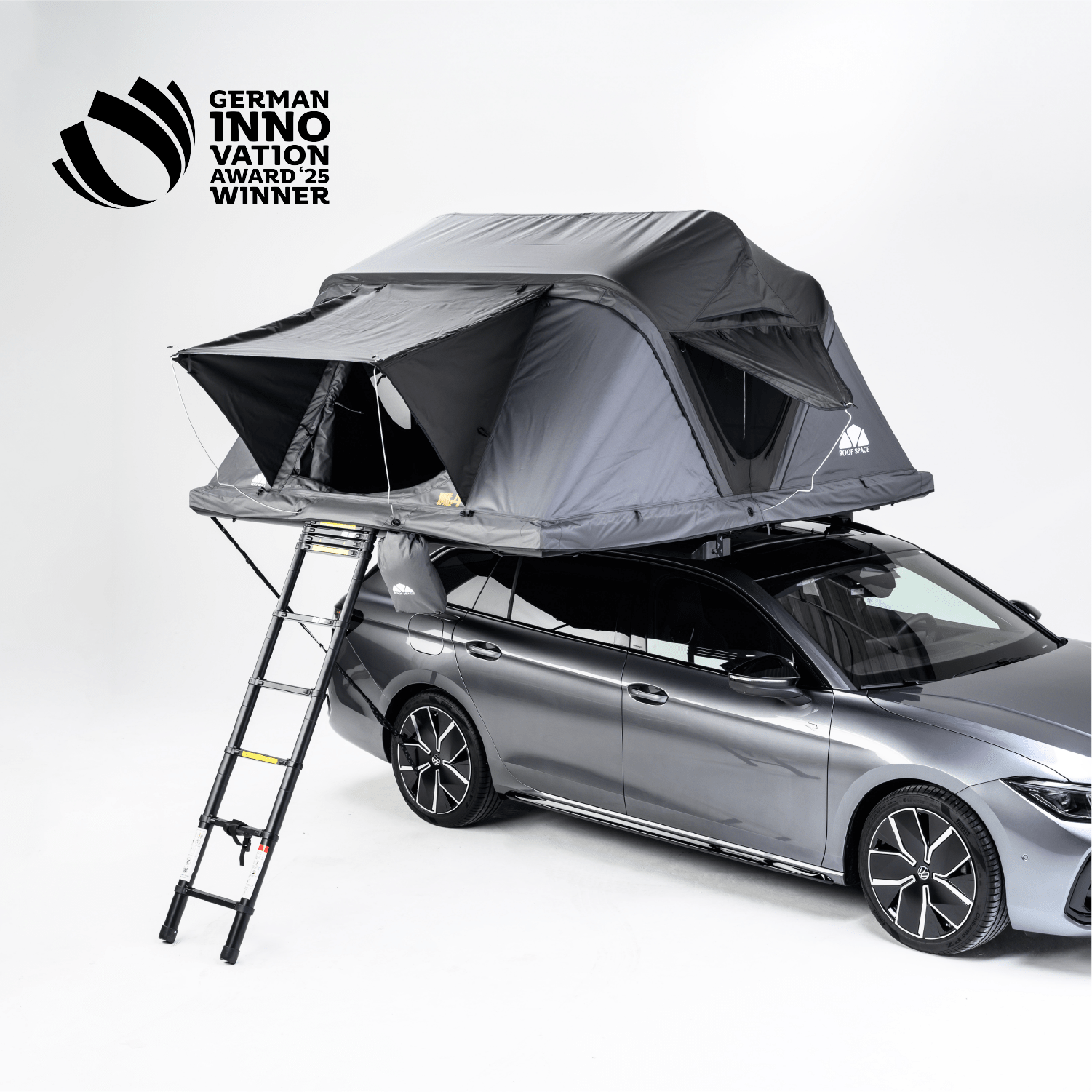
A thunderstorm can be an impressive natural spectacle while camping, but it also poses particular risks when camping with a rooftop tent. This rooftop tent guide explains how to properly behave during a thunderstorm, what dangers exist, and how to enjoy your trip safely.
Risks with a roof tent during thunderstorms
A rooftop tent is a great way to travel, combining comfort with a sense of connection to nature. However, you should be aware of the following risks during a thunderstorm:
-
Lightning strikes: Roof tents do not offer protection against lightning strikes because they do not constitute a Faraday cage .
-
Wind: Strong gusts of wind can make the roof tent unstable or even damage it.
-
Wetness: Heavy rain can cause water ingress, especially if the tent is not of high quality.
Safety tips for using a roof tent during thunderstorms
With the right preparation and appropriate behavior, you can minimize the risk for yourself:
1. Location selection
-
Safe campsites: Choose a spot far away from isolated trees, hills, or bodies of water.
-
Low-lying terrain: Avoid exposed areas and park your vehicle in a sheltered location.
2. Behavior when a thunderstorm is approaching
-
Leaving the tent: Get out of the roof tent and seek shelter in a car or building, as the risk is lower there. Since thunderstorms can approach quickly, avoid taking down your roof tent.
-
Keep your distance: Stay at least 30 meters away from trees, vehicles, or metal objects.
3. Check equipment
-
Weatherproof materials: Make sure your roof tent is made of water-repellent and durable materials.
Emergency kit: Pack a flashlight, first aid kit, and a battery-operated radio.
Myths and facts: How safe is a roof tent during a thunderstorm?
Myth #1 - The car under the roof tent acts like a Faraday cage.
Fact: The protection provided by a Faraday cage only applies when you're inside the closed vehicle. A roof tent doesn't offer this protection.
Myth #2 - Small thunderstorms are harmless.
Fact: Even a single flash of lightning can be life-threatening. It's always better to be safe than sorry.
Myth #3 - Tents with metal poles attract lightning.
Fact: Metal poles in a tent do not automatically increase the risk of lightning strikes, as the probability of a strike depends mainly on the environment, such as exposed locations or differences in altitude.
Checklist: What to do in a roof tent during a thunderstorm?
1. Check the weather forecast: Use weather apps to receive timely warnings about thunderstorms.
The following weather apps are frequently used by campers:
2. Park safely: Park your vehicle in a protected location.
3. Leave the tent: During a thunderstorm, seek shelter in a vehicle or building.
4. Keep your distance: Avoid metal objects and tall structures.
5. Stay calm: Panic doesn’t help – act prudently and methodically.


Leave a comment
This site is protected by hCaptcha and the hCaptcha Privacy Policy and Terms of Service apply.